
Refinance Toronto
Turn Toronto home equity into cash - consolidate debt, access up to 80 percent of value, or bring your payment down.
We calculate the penalty before anything else, shop your file across 50-plus lenders, and lay out the real cost of refinancing next to the alternatives - private financing included. If refinancing isn't your strongest option, we'll tell you.
All mortgages are subject to lender approval and property qualification.
What does refinancing a mortgage in Toronto involve?
Refinancing replaces your current mortgage with a new, usually larger one so you can access equity, consolidate debt, or change your rate and term. Banks allow up to 80 percent of the home's value for qualified borrowers; when bank rules don't fit, a private refinance can serve as a short bridge.
Related: Second mortgages · Refinance guide · Refinance penalties
Mortgage Agent Level 2, FSRA #M15001135 · Mortgage Alliance, FSRA Brokerage #10530
View credentialsA new mortgage that steps in for the old one.
Refinancing in Toronto means a new mortgage is registered against your property, your existing mortgage is paid out at closing, and any leftover funds are advanced to you. That's different from a renewal, where you simply continue on the same balance under a new term, and different again from a second mortgage, which sits behind the first without disturbing it.
Because refinances can't be insured in Canada, the cap is 80 percent of appraised value. On a Toronto home valued at $1,200,000 with $600,000 still owing, that's roughly $360,000 of accessible equity before costs. Given how much values across the city have climbed over the last decade, that figure often surprises homeowners on the upside.
Rate alone rarely drives the decision. What matters more is the penalty to exit your current term, the closing costs, how long you intend to keep the property, and whether a second mortgage or a private mortgage would end up cheaper over the same stretch of time.
Fold in high-interest debt
Combine credit cards, lines of credit, car loans, and CRA balances into mortgage-rate debt and a single monthly payment.
Unlock cash from equity
Reach up to 80 percent of your Toronto home's value for a renovation, a rental down payment, tuition, or a business investment.
Reduce the monthly payment
A stronger rate, a longer amortization, or both can ease the carrying cost when cash flow is stretched thin.
Roll first and second mortgages together
The typical exit from a private or second mortgage is one clean new first mortgage.
Handle separation or estate buy-outs
Refinance to buy out a spouse or an estate so the family home stays in one name.
Move lenders at renewal
Renewal is your window to shop freely. The letter your bank mails you is almost never its best available offer.
Working out your 80 percent ceiling.
Refinancing in Canada tops out at 80 percent loan-to-value. The math is simple, and worth running before you talk to any lender.
Worked example
- Appraised value: $1,200,000
- Maximum new mortgage at 80%: $960,000
- Current mortgage balance: $600,000
- Equity available: about $360,000 before costs
Illustration only. The appraisal, property type, income, and credit all affect the final approved amount.
Subtract the prepayment penalty, legal fees, appraisal cost, and any discharge fee from that figure to see your true net proceeds. We put those numbers in writing so you're comparing real cash, not a headline amount.
What breaking your term actually costs.
On a variable-rate mortgage the penalty is usually a manageable three months' interest. On a fixed rate it's the greater of three months' interest or the interest rate differential, and IRD formulas vary enormously by lender - some big-bank calculations land far higher than a monoline lender would charge on an identical balance.
That's why our first move is calling your current lender for an exact payout figure. Once the penalty is a real number instead of an estimate, the choice usually becomes clear: refinance now, hold out for maturity, or register a second mortgage and consolidate everything once you renew.
Blend-and-extend is a third route worth checking - your existing lender blends your old rate with a new one and sidesteps the penalty entirely, though it does keep you tied to that lender.
Weighing whether refinancing makes sense?
Text or call (647) 342-1355 and we'll run the penalty and break-even math free of charge. No credit pull to start.
Bank, alternative, or private refinancing.
A decline from your own bank doesn't take refinancing off the table - it just means the file belongs with a different tier of lender.
Bank and A lenders
The lowest rates, a full stress test, and a requirement for provable income and clean credit. The right fit for most Toronto refinances that qualify.
Alternative and B lenders
More flexible on self-employed income, credit blemishes, and rental portfolios, at a modest premium over bank rates, usually over one- to three-year terms.
Private refinancing
Fast and equity-driven, built for arrears, power of sale, or files a bank won't touch. Short term, with a clear exit back to an A lender.
From first text to funded.
1. The quick snapshot
Property address, ballpark value, current balance, rate and maturity date, and what you want the funds to do. Send it over and we take it from there.
2. Penalty and break-even math
We work out the prepayment penalty and weigh refinancing now against waiting for renewal or registering a second mortgage. If refinancing isn't the winning option, we'll say so.
3. Lender shortlist
Your file goes to banks, monoline lenders, credit unions, and alternative lenders, and comes back with real offers - rate, term, and closing costs, all in writing.
4. Appraisal, approval, funding
Appraisal ordered, conditions cleared, lawyer instructed. The old mortgage is paid off and the new one funds - typically two to four weeks for a bank file.
Refinancing FAQ.
What actually happens when you refinance a Toronto property?
You swap your current mortgage for a new, typically larger one, freeing up equity, changing lenders, or resetting your term. The new mortgage pays off the old one at closing, and whatever equity is left over comes to you. Around Toronto, most owners refinance to consolidate debt, cover a renovation, or raise a down payment on a second property.
What's the maximum equity I can pull out?
Refinances can't be insured in Canada, so the ceiling is 80 percent of your home's appraised value. Multiply the value by 0.80, subtract what you still owe, and the remainder is roughly your maximum access before fees.
Does refinancing trigger a penalty?
It will if you're breaking a closed term early. Variable-rate penalties are usually three months' interest. Fixed-rate penalties are the greater of three months' interest or the interest rate differential, which can be substantial. We work out the exact penalty first and show you whether the equity gained justifies it, or whether a second mortgage or simply waiting for renewal costs less.
Do I need to requalify to refinance?
With a bank or A lender, yes - stress test included. If your income or credit won't clear that bar, alternative and private lenders can still refinance based primarily on the property and your equity, at a higher cost. We'll tell you up front which tier fits your file.
How long does refinancing take in Toronto?
A standard bank refinance typically runs two to four weeks start to finish, appraisal and lawyer included. Private and alternative refinances can close much faster when timing is critical.
What fees come with a refinance?
Budget for an appraisal, legal fees to discharge the old mortgage and register the new one, a possible discharge fee, and any prepayment penalty. Some lenders will cover part of the legal or appraisal cost. Every number is confirmed in writing before you commit.
Is it worth refinancing purely to consolidate debt?
Often, yes. Rolling high-interest credit card and line of credit balances into mortgage-rate debt can meaningfully lower your monthly obligations. The catch is discipline - close or reduce the freed-up credit limits so the balances don't creep back up.
Can I refinance with weak credit or self-employed income?
Yes, through alternative and private lenders that lend primarily against the property. Expect higher rates and fees and shorter terms, usually with a plan to rebuild credit or document income for about a year before moving back to an A lender.
Refinance now, or take a second mortgage instead?
If your current rate is high or your term is almost up, refinancing is the cheaper long-term play. If you're sitting on a low-rate first mortgage or can't requalify right now, a second mortgage leaves the first untouched and is typically the smarter move.
Can a rental or investment property be refinanced?
Yes. Rental refinancing around Toronto is generally capped at 80 percent for properties with one to four units, and lenders will credit a portion of the rental income toward your qualification.
Refinancing resources.
Refinance Toronto: the complete guide
The 80 percent rule, penalties, costs, and timing explained in one place.
Mortgage penalties explained
IRD versus three months' interest, and when breaking a term still pays off.
Refinancing to consolidate debt
How the payment math works and how to stop balances from creeping back.
Refinance or second mortgage?
A decision framework built for Toronto homeowners sitting on equity.
Refinancing across Toronto and the GTA
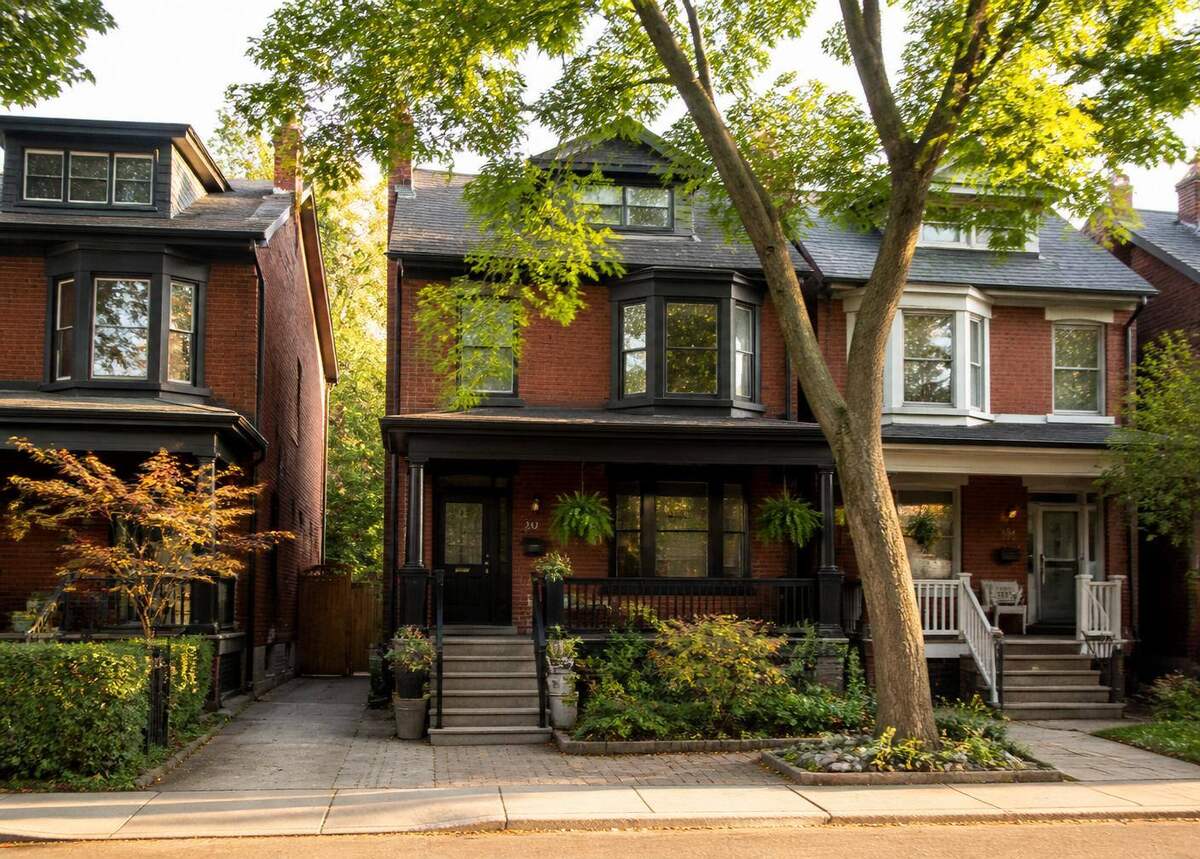
We refinance detached homes, semis, townhouses, condos, and small rental properties throughout the city and neighbouring regions.
Send us the property and the balance.
Address, ballpark value, current mortgage balance, rate and maturity date, and what you'd use the funds for. We'll come back with refinance options and the penalty math.
Text (647) 342-1355 for the fastest reply, or call the same number.